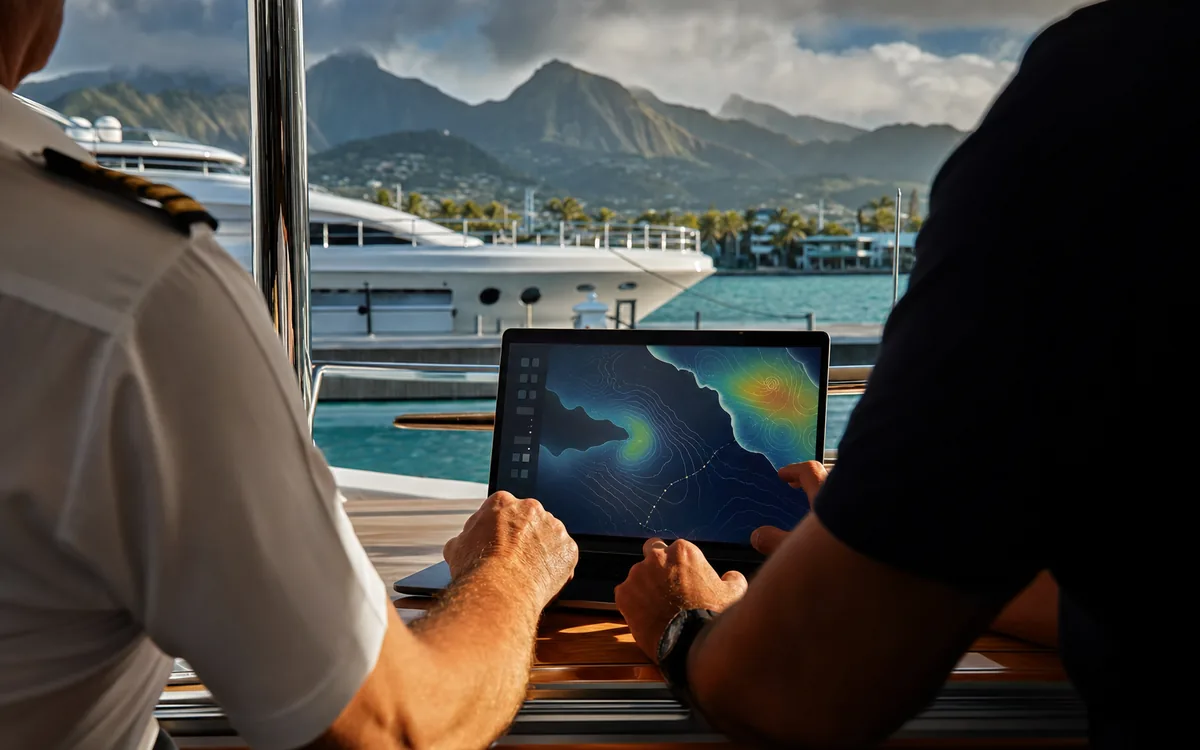
Supporting weather and route information — the captain decides.
Interisland passages in Hawaiʻi cross open channels where trades, swell, and current matter. HYANS gathers and summarizes NOAA forecasts, trade and swell context, and channel and port-approach notes as supporting information for captains and operators — so the people responsible for the vessel have a clear local picture to weigh.
Information to support judgment, not replace it.
HYANS reviews public NOAA marine forecasts and local conditions and packages them into a clear briefing — the trade-wind pattern, swell, the character of the channel you are crossing, and the timing considerations for a departure window or an interisland leg.
This is supporting information only. HYANS does not provide professional weather routing and does not replace the captain's and operator's navigation judgment. Forecasts change, conditions in the channels can differ from any forecast, and the final decision to sail, the route, and the timing rest entirely with the captain and operator, who retain responsibility for the safety of the vessel.
For the passages themselves, see Interisland Support; for the channels, see the channels overview.
What HYANS coordinates
- →NOAA marine forecast review, summarized in plain, decision-ready terms
- →Trade-wind, swell, and sea-state context for the relevant waters
- →Channel notes for interisland crossings and their typical character
- →Port-approach considerations for arrival and departure planning
- →Departure-window considerations for a passage or a long leg
- →Interisland timing context to inform an itinerary
- →A clear briefing the captain and operator can weigh against their own sources
- →Coordination with local sources — always as supporting information, never a directive
Typical requests we handle
Passage & timing
- Departure-window context for a leg
- Interisland timing considerations
- Channel-crossing character and notes
- Arrival and departure port-approach context
Conditions context
- Current NOAA marine forecast review
- Trade-wind pattern summary
- Swell and sea-state context
- How conditions may differ across channels
Before arrival, in port, before departure
- Tell us the passage
Share the intended leg or interisland movement, the vessel, and your target window. HYANS gathers the relevant public forecasts and local context for those waters.
- Review and summarize
We review NOAA marine forecasts and conditions and package the trade, swell, channel, and port-approach picture into a clear, plain briefing for your window.
- Provide it as support
We deliver the briefing as supporting information for the captain and operator to weigh alongside their own sources and professional routing tools. We do not make the call.
- Update as it changes
If the picture shifts before departure, we update the briefing. The decision to sail, the route, and the timing remain the captain's and operator's responsibility throughout.
Vessels this supports
Each links to how HYANS scopes the call for that vessel type.
Explorer Yachts
Departure-window context before a long Pacific leg.
Learn more →Sailing Yachts
Channel-timing and forecast context for passages.
Learn more →Superyachts
Interisland timing context for itinerary planning.
Learn more →Commercial Vessels
Arrival and departure timing context for the call.
Learn more →Research Vessels
Sea-state context to support field-operation planning.
Learn more →Tugs, Barges & Workboats
Channel and timing context for towing movements.
Learn more →What to prepare
Passage details
- Intended leg or interisland movement
- Target departure window
- Vessel type and characteristics
- Ports of departure and arrival
Context we should know
- Schedule constraints on the window
- Any comfort or motion sensitivities
- The captain's own routing sources
- Point of contact for the briefing
Frequently asked
Do you provide professional weather routing?
Who decides whether and when to sail?
Where does the forecast information come from?
Can you advise on the interisland channels?
Planning a passage or interisland leg?
Tell HYANS the leg, the window, and the vessel. We will provide a clear supporting briefing for your captain and operator to weigh — the navigation call stays yours.