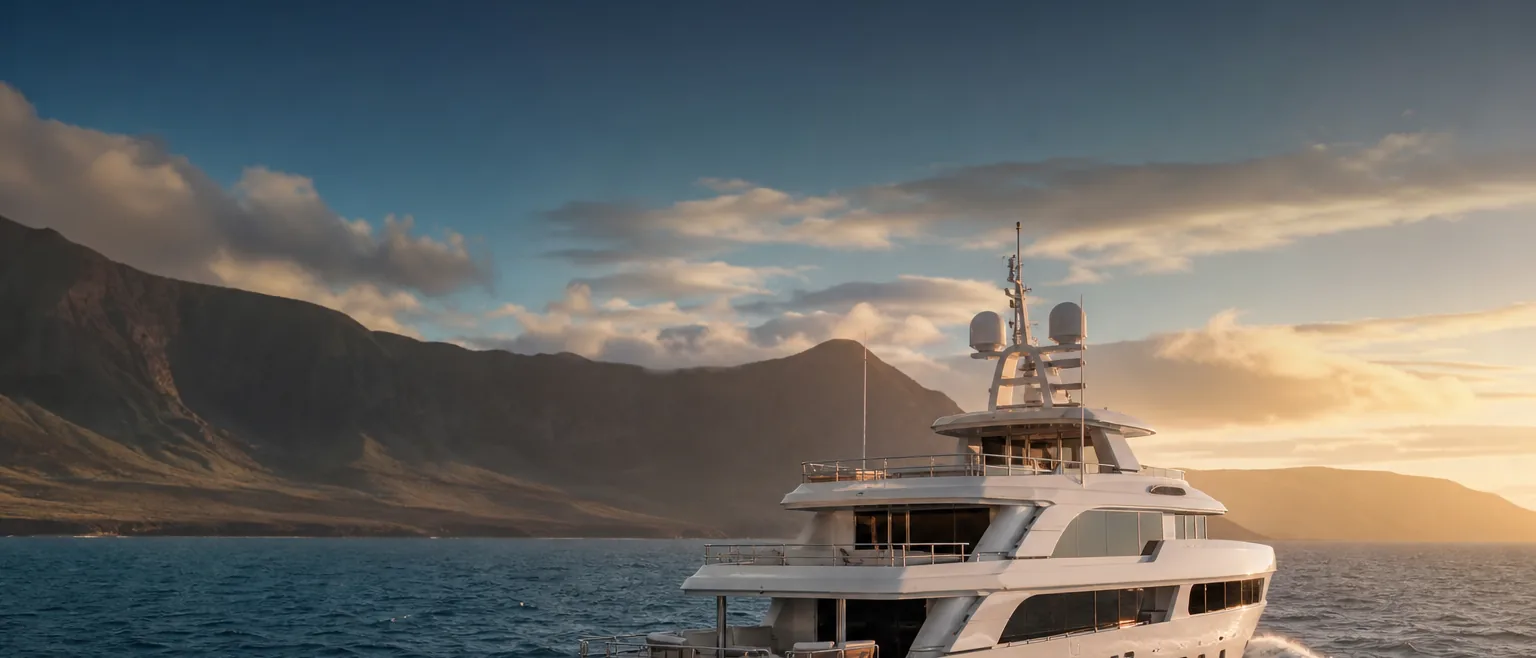
The Pailolo Channel, in planning context.
The Pailolo Channel separates Molokaʻi from Maui in the Maui Nui waters. It is comparatively narrow, and the constriction between the two islands is known to accelerate the trade-wind flow — a factor operators plan around and brief HYANS on early.
Where the Pailolo Channel sits
The Pailolo Channel runs between the east end of Molokaʻi and the northwest of Maui, linking the Molokaʻi coast with the Lāhainā and West Maui approaches. It is one of the narrower interisland channels, sitting within the cluster of islands that make up Maui Nui.
For operators moving between Molokaʻi, Maui, and the wider Maui Nui waters, the Pailolo is a frequent crossing on interisland itineraries. Its narrowness and orientation relative to the trades mean the sea state is something to keep flexible around rather than fixed on the calendar.
As with every channel page here, this is context for planning conversations — not a passage plan. Your captain plans and commands the crossing using current official forecasts, notices, and charts.
What tends to shape a call across this channel
- →The channel is known for accelerated wind between the islands, so build schedule flexibility into the plan
- →Coordinate Molokaʻi and Maui harbor arrangements in advance — small-boat space is limited at both ends
- →Fuel and provisioning are best staged before the window rather than sourced mid-itinerary
- →Time guest and crew movements around a realistic window, not a fixed hour
- →Confirm current harbor operating status and authority requirements at both ends before departure and arrival
General conditions to factor into planning
Because the channel narrows between Molokaʻi and Maui, the trade-wind flow can accelerate through it, and the wind-driven sea can be more energetic than the open channels nearby. Operators generally watch trade-wind strength closely and keep the timing adaptable. Swell reaching the Maui Nui waters adds a further variable depending on season and source.
This is general awareness, not a forecast. The crossing is planned and timed against current official marine forecasts and the captain's judgment; treat the description here as supporting context for that planning, nothing more.
How we coordinate the shore side at each end
Before departure, HYANS coordinates the shore side at the departure island — berth and dockage where available, fuel and provisioning staged in advance, and crew or guest logistics timed to the plan. On the Maui side, we coordinate arrival berth or mooring where available and the vendor or provisioning items West Maui calls often involve. See Port Coordination and Fuel & Bunkering.
One agency holds the whole itinerary together through Interisland Support, so the Molokaʻi and Maui ends of the crossing are handled as a single plan. The decision to sail and the navigation of the channel remain with the captain; we make sure the shore side is not what holds you up.
Frequently asked
Is the Pailolo Channel windier than others?
Can you coordinate a Molokaʻi–Maui itinerary end to end?
Do you give routing advice for the crossing?
Channel pages provide planning context only — not navigation instruction. The captain retains full responsibility for navigation, passage planning, and safety of the vessel. HYANS provides shore-side coordination and planning support, not navigational command. Conditions in Hawaiʻi's channels change quickly; consult current official forecasts, notices, and charts, and confirm port status and authority requirements before departure and arrival.
Crossing the Pailolo Channel?
Tell HYANS your Molokaʻi and Maui plans and your window. We will stage the shore side at both ends so a flexible crossing schedule is easy to hold.