
Plan the call
Vessel profile, port-call file, itinerary context, weather and anchorage intelligence, and the service scope for the visit.
The platform
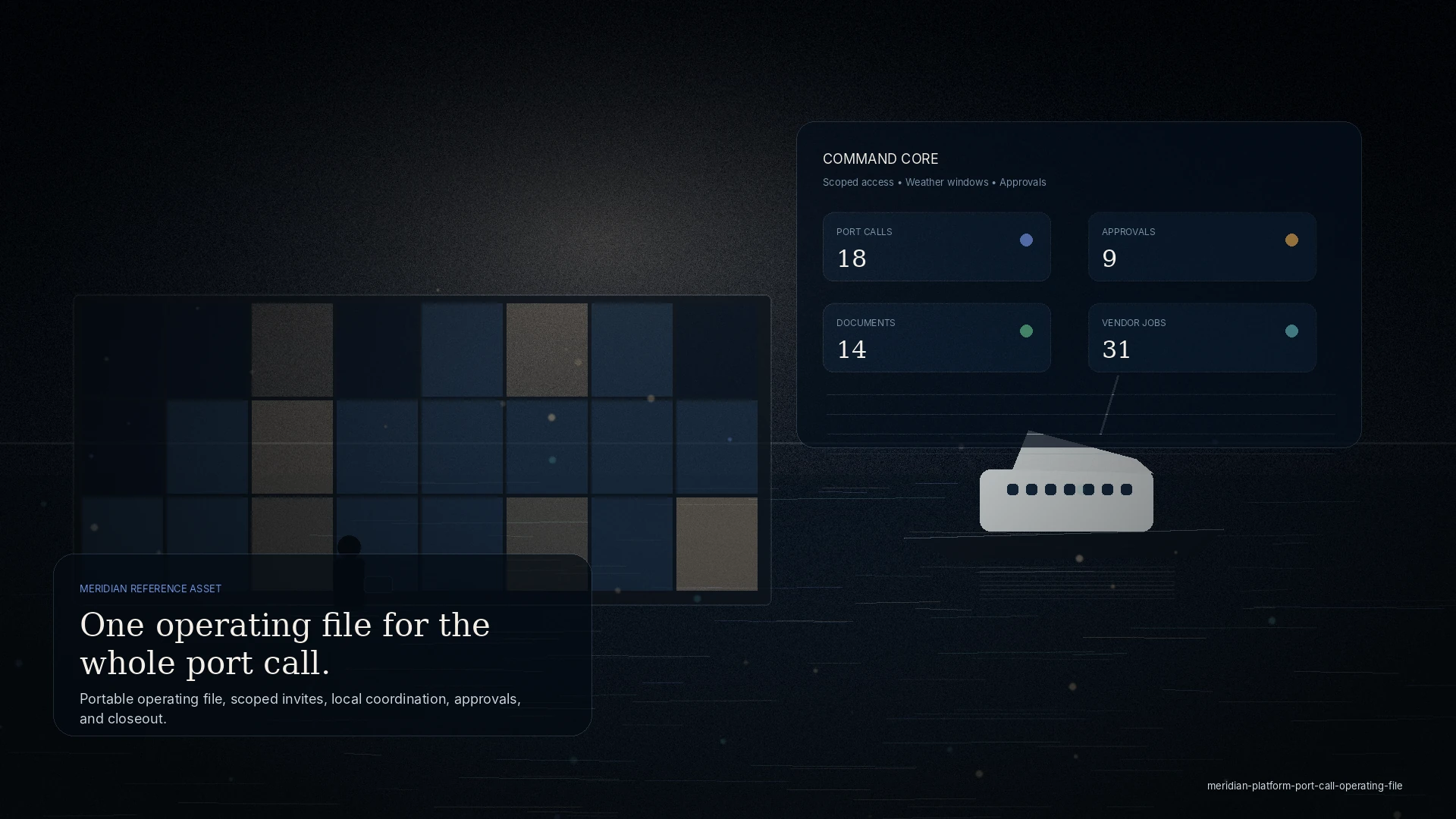
MERIDIAN is a controlled operating workspace for serious vessel calls — planning, agency execution, service requests, anchorage intelligence, vendor invoices, approvals, PDA/FDA closeout, and executive reporting, all in one file that travels port to port.
What it does
Every port call runs the same four beats — MERIDIAN gives each one a shared, auditable home instead of a scattered email thread.
Vessel profile, port-call file, itinerary context, weather and anchorage intelligence, and the service scope for the visit.
Invite the local agent and vendors for that port; collect quotes, documents, and status updates in scoped threads.
Quote comparisons, cost approvals, and invoice backup — routed to the right principal, manager, or purser.
PDA/FDA-ready closeout packets, exportable cost data, and a record that stays with the vessel for the next port.
Portable by design
A yacht can license MERIDIAN directly and keep one continuous operating history across ports. At each port of call, the captain or management company invites only the people needed for that visit.
Invitees may include:
Each invitee receives scoped access only to the relevant visit, request, invoice, document, or task thread. The vessel or programme keeps the operating history after the port call closes.
Past port calls, invoices, supplier notes, authority documents, weather decisions, and closeout packets stay with the vessel.
Local partners can contribute without seeing sensitive principal, itinerary, finance, or vessel-wide information.
The next agent does not start from zero. MERIDIAN carries the vessel's preferences, document standards, service history, and approval pattern forward.
Where MERIDIAN fits
Service requests, quotes, approvals, invoice backup, and visit updates move into one operating file.
MERIDIAN does not need to replace yacht accounting. It produces clean port-call backup, cost packets, and exportable data.
MERIDIAN does not compete with planned maintenance systems. It coordinates local service execution, vendors, documents, and closeout.
MERIDIAN turns local knowledge, authority workflow, supplier coordination, and briefing production into a repeatable system.
Inside the workspace
Captured from the current build. Intake runs once per vessel; guides and the service desk run on every call.
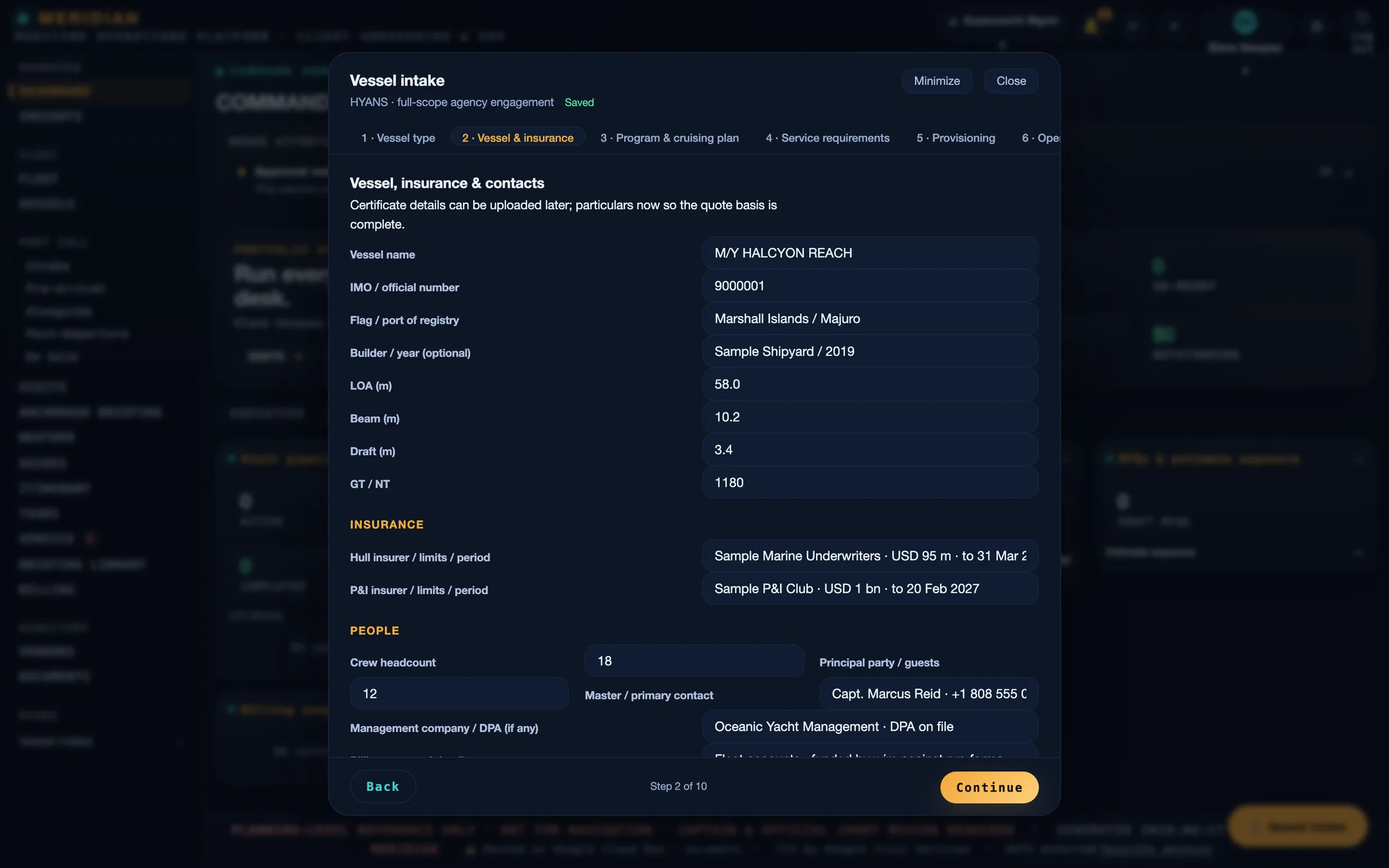
A ten-step intake captures particulars, insurance, the cruising programme, service requirements, provisioning, and operational particulars — and turns the answers into the required-document list for that vessel’s category.
It saves as you go, so an intake can be handed between the captain, the manager, and the office without restarting.
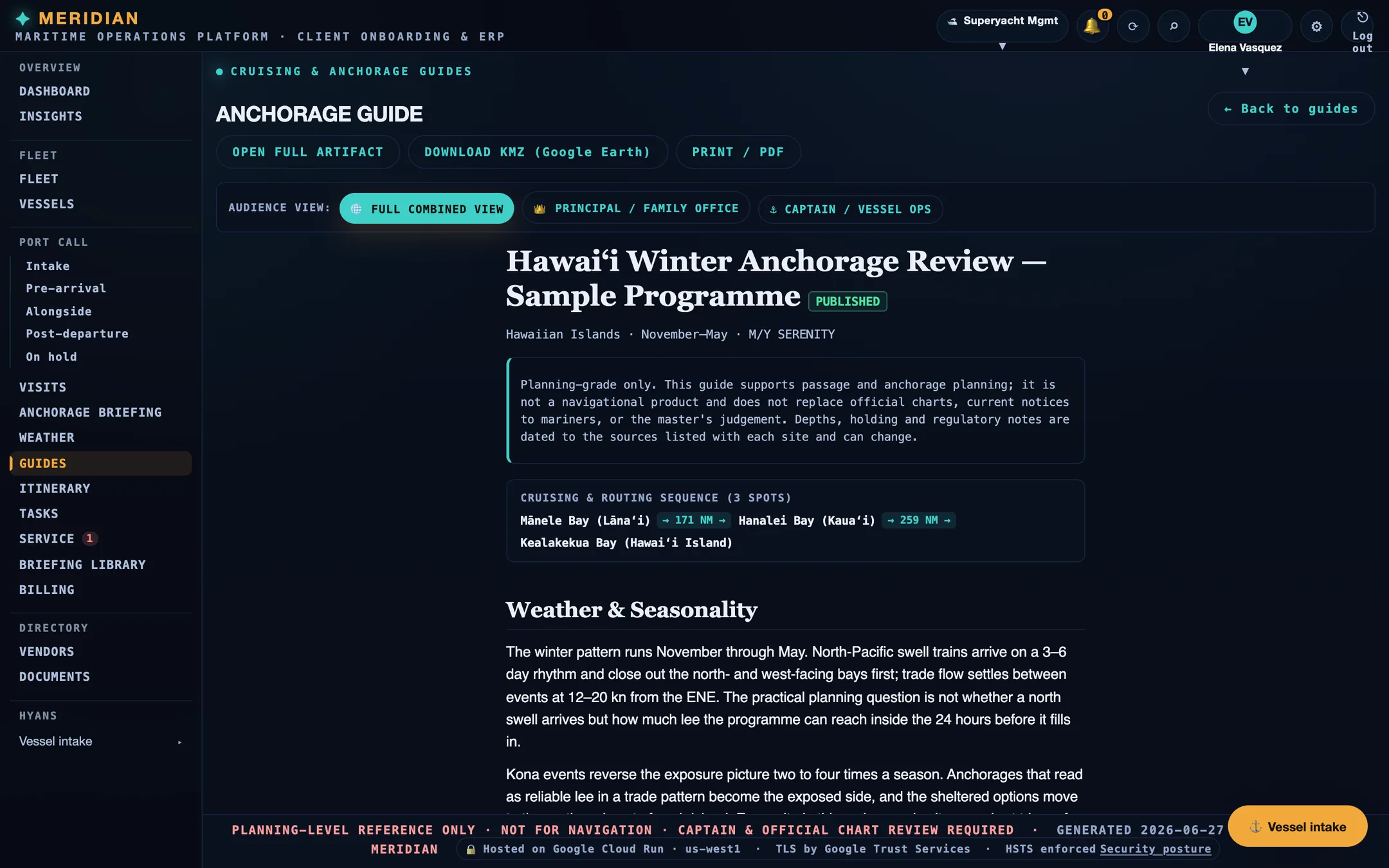
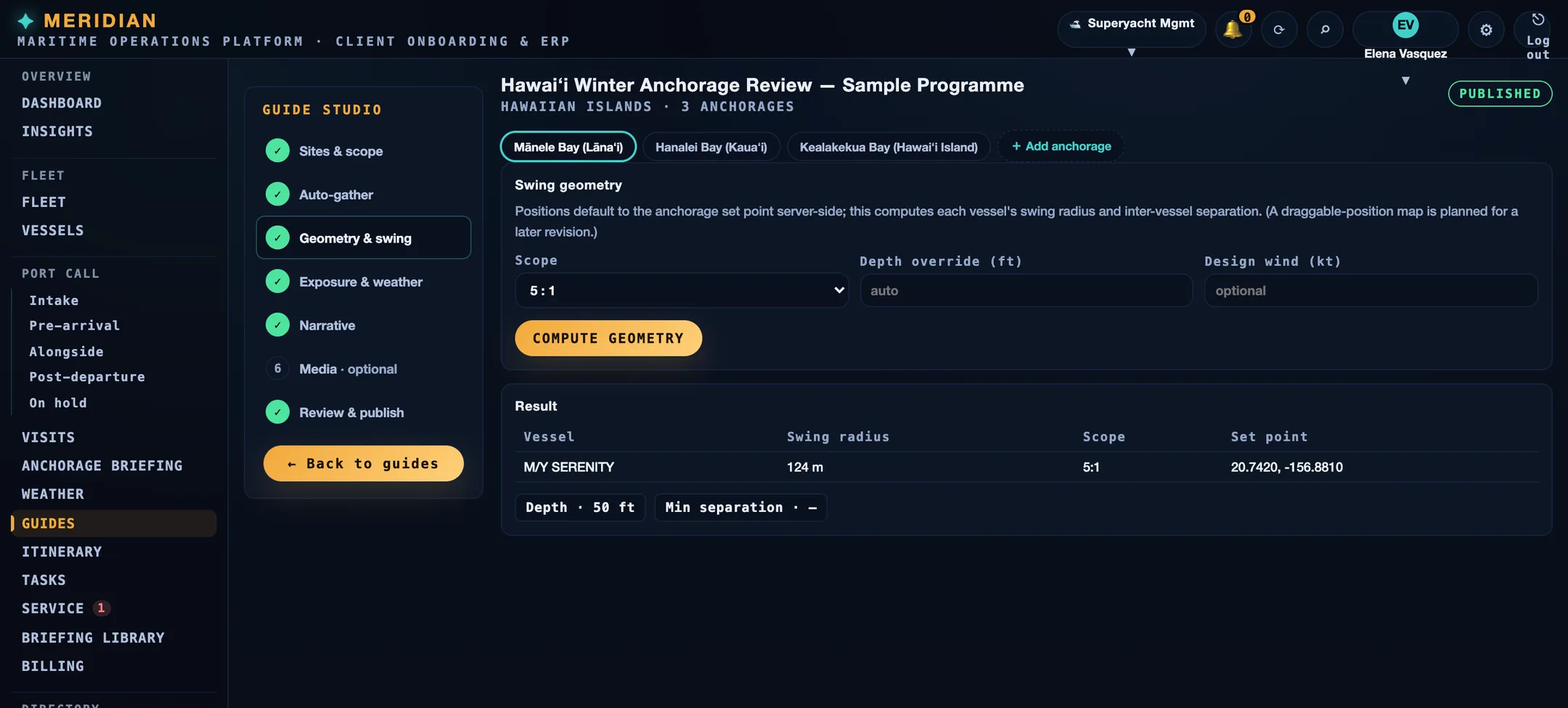
A guide is authored through a seven-step studio: sites and scope, an automatic gather of depths, tides, currents, buoys and regulatory extracts, swing geometry per vessel, exposure and climatology, then the written sections.
Publishing is gated on a lint pass, so a guide cannot go out with an unknown bottom type or a missing disclaimer.
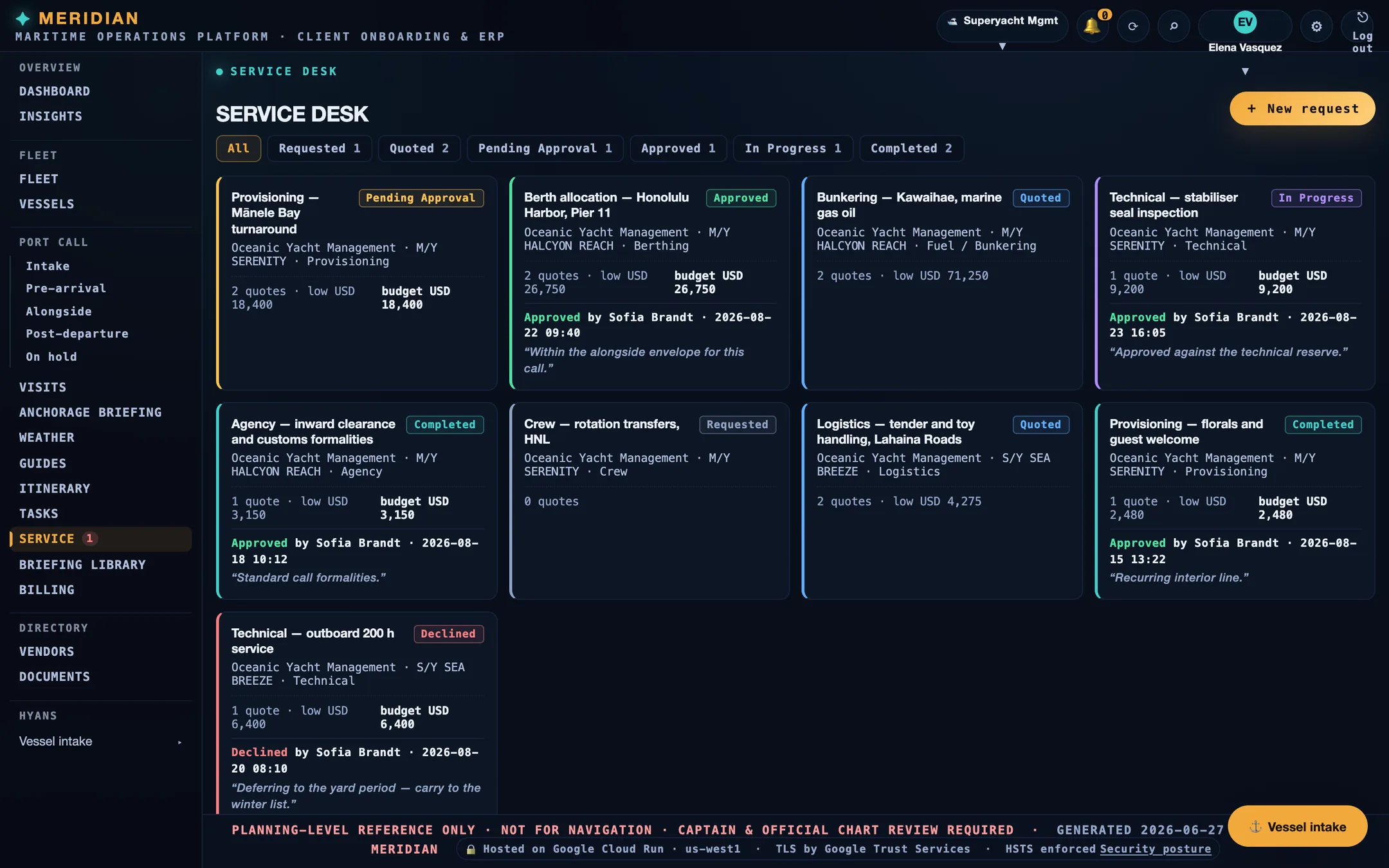
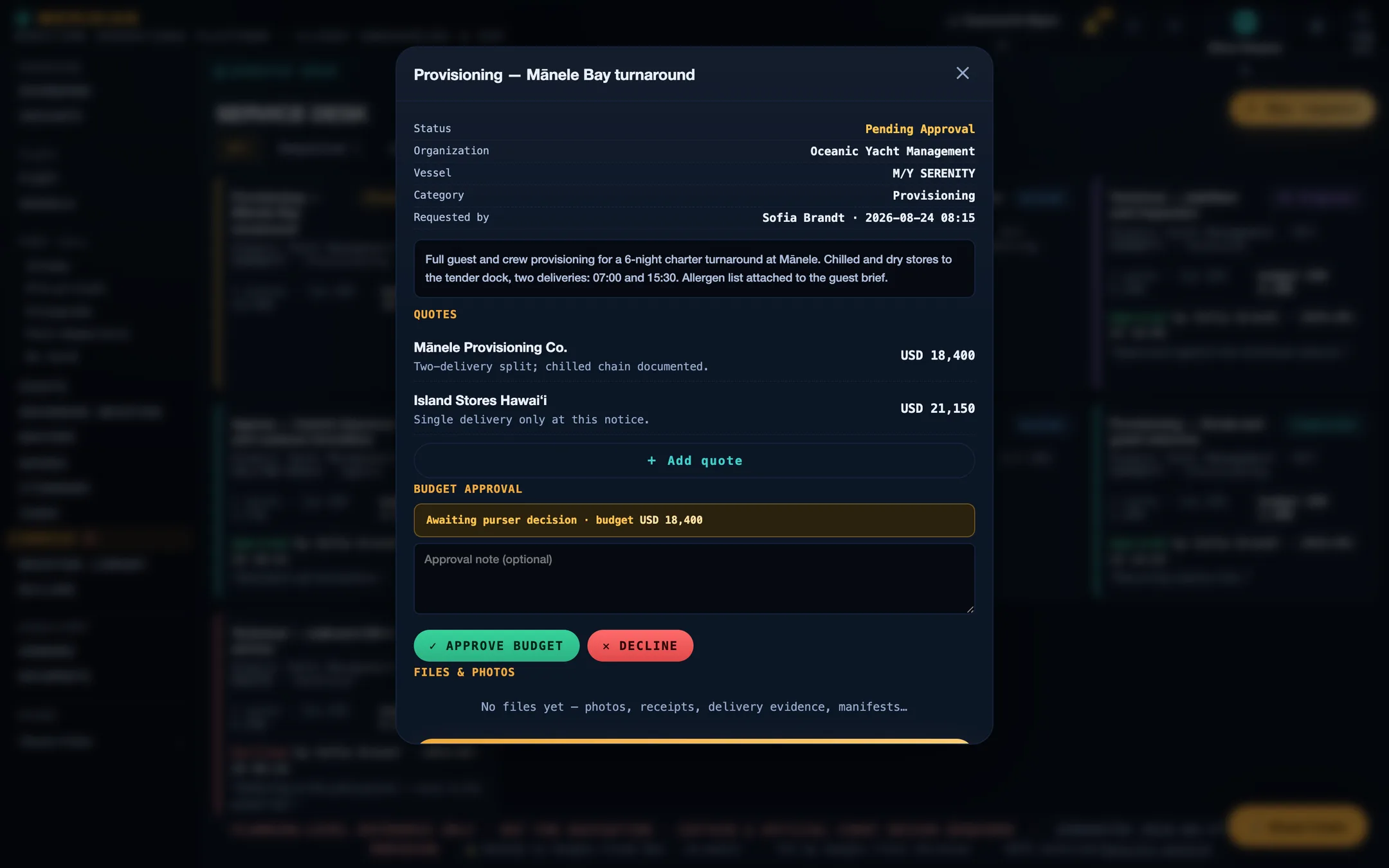
Every request carries its own quotes, budget, approval tier, and decision. The desk shows the whole call at once — what is requested, quoted, awaiting a decision, running, and closed.
The decision line records who approved the spend and when, so the closeout packet does not have to be reconstructed from email.
Screens are from the current build, populated with sample data. Vessels, organisations, people, vendors, and figures shown are illustrative and are not those of any client.
Ready
Every production workspace begins with intake, review, scoped configuration, and a written proposal. Guest workspaces are approved manually.